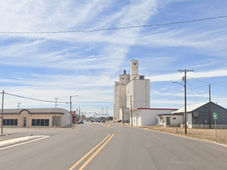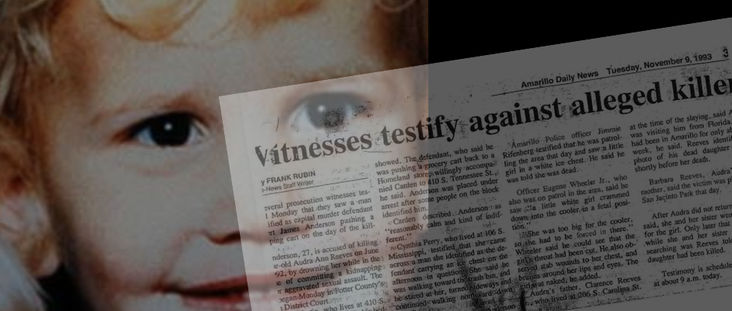
Lewis Martin heard the metal shopping cart as it jolted and slid down the broken sidewalk lining the 400-block of South Tennessee Street.
He looked through his bedroom window to see the source of the sound.1 It was 3:00 p.m.on June 9, 1992.
He saw the bright white ice chest perched in the cart; the orange Homeland logo on the cart's handle shone like a garish neon sun.
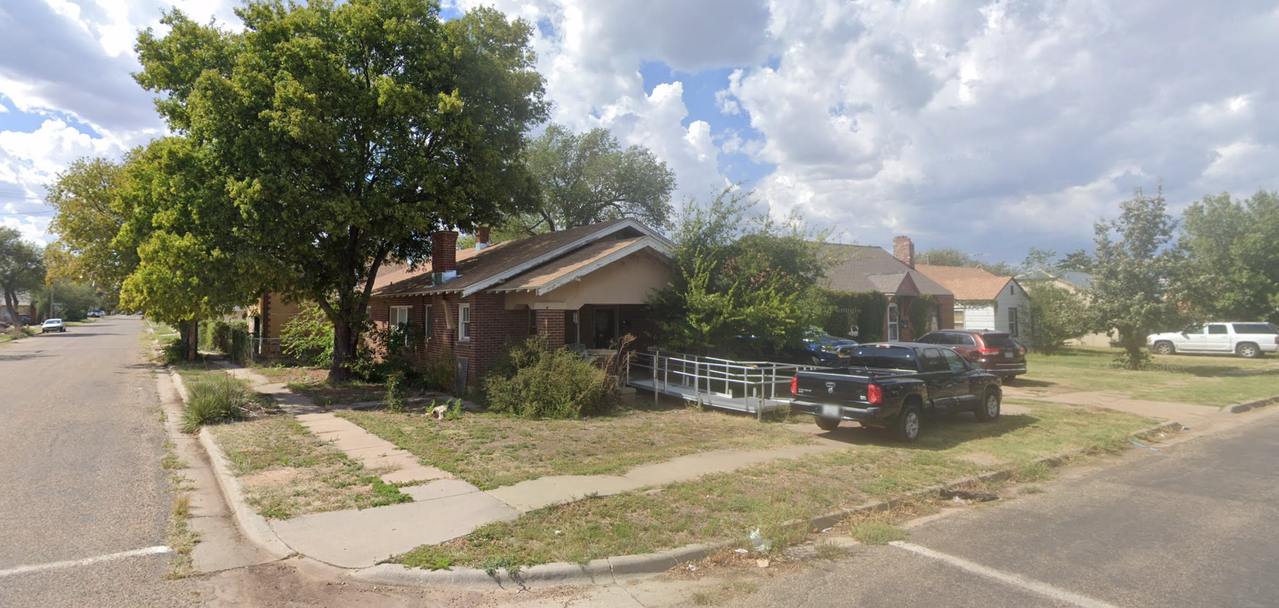 410 S Tennessee
He saw the man pushing the cart. He wore a burnt orange baseball cap pulled down low over his eyes.
He watched the man steer the cart down towards the alley behind Tennessee Street, dipping out of view.
He would later tell a courtroom how he stepped outside his home at 410 S. Tennessee with trash bags in hand about 10 minutes later.
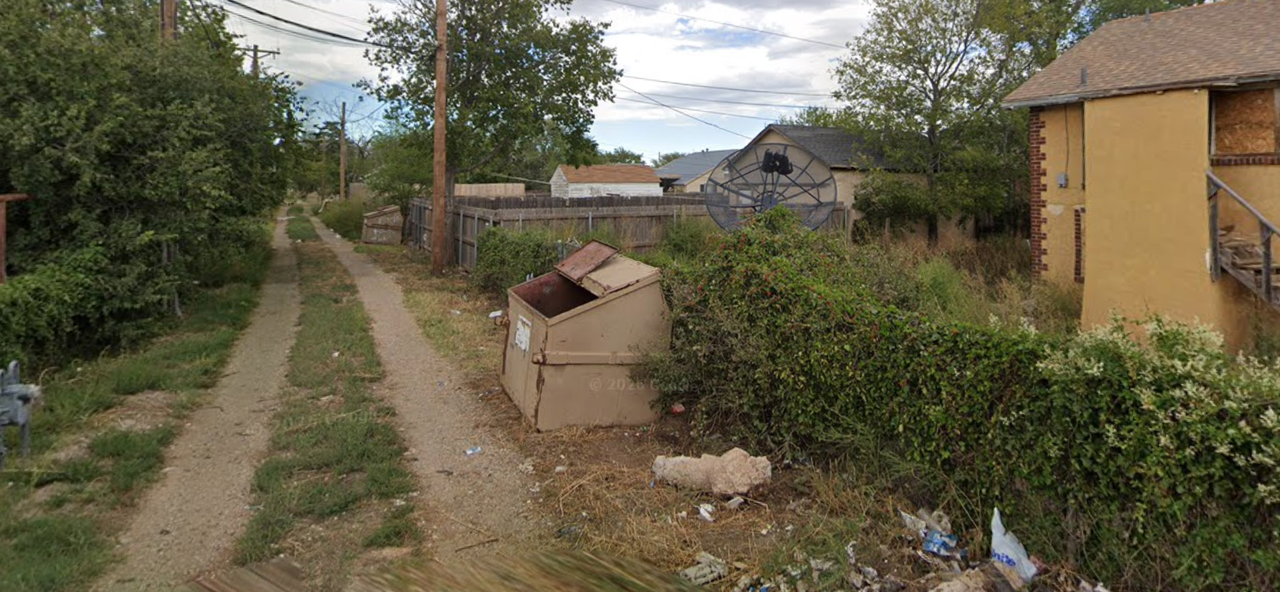 Dumpster in alley of 400-block S. Tennessee
Coming up to the dumpster in the alley, he saw the ice chest nestled amid the trash inside. Driven by a casual curiosity, Lewis carefully pried the lid off of the ice box.
Inside, was Audra.
A visit with no return
Audra Ann Reeves came from Florida to Amarillo for a summer visit with her father, Clarence Reeves, Jr, and her stepmother, Barbara.2 The five-year-old blonde girl arrived only seven days before her death.
 206 S Carolina
From the front yard of Clarence's home at 206 S Carolina St, San Jacinto Park was a short city block away. And as children will do, Audra raced the short distance to play with the other children who lived in the San Jacinto neighborhood of Amarillo, Texas.
Audra knew her way back to the house by heart. But as it was, right along that short distance was where Robert James Anderson lived.
Sometime in the early afternoon of June 9, 1992, Anderson fought with his wife at their small home at 3310 SW 2nd Ave. During the couple's fight, his wife informed him that she was having an affair and planned to leave him.
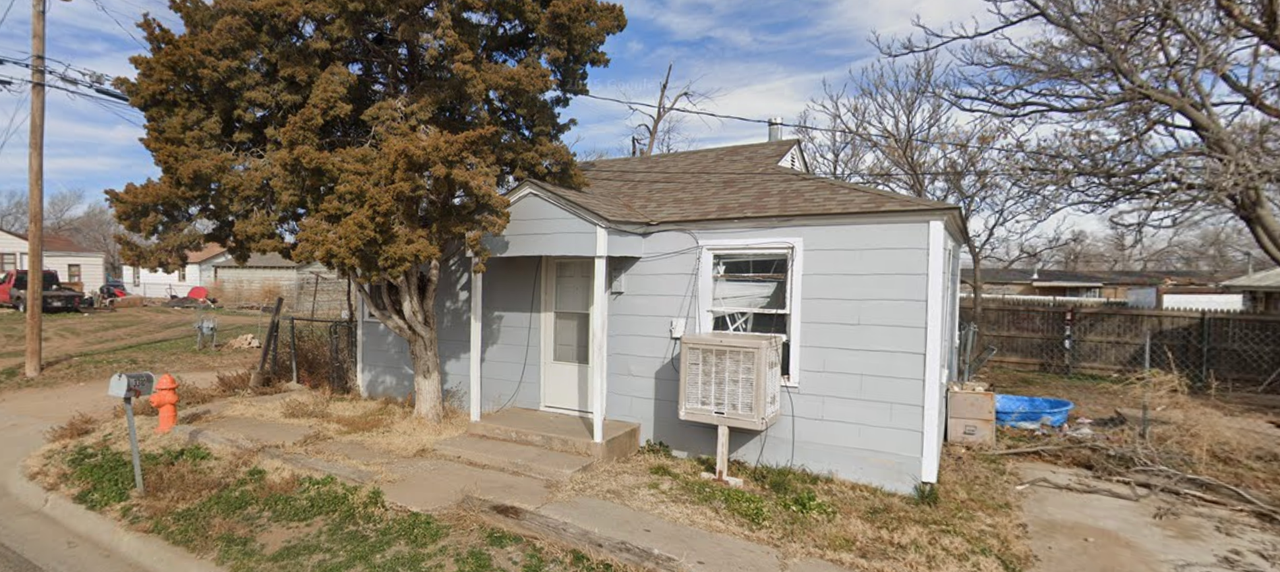 3310 SW 2nd Ave
His wife departed, telling him that she did not want to see him upon her return. Consumed by the fury of their argument, Anderson stepped outside and saw a small, young girl with blonde hair trotting down the sidewalk.
"Things had been real crazy for the last week and a half," Anderson said in a later tape-recorded confession.3
"Something snapped in me when I saw her. So I grabbed her. I took her inside the house and locked the door."
The 911 call from Tennessee Street
When Lewis Martin opened the icebox and saw the nude body of Audra Ann Reeves, he called 911.
The 911 call brought Amarillo police officer Barry Carden to the alley. Lewis described the man he saw pushing the shopping cart that held the icebox and Officer Carden began to search.
Near the corner of Second Avenue and South Carolina, the officer saw a man walking and called for him to stop.
Carden asked the man, who identified himself as Robert Anderson, what he was doing. His response was that he was returning the shopping cart to a nearby Homeland store.
Carden then took Anderson with him to Tennessee street.
There, Martin viewed Anderson as he sat in the backseat of Carden's patrol car and confirmed that he was the man pushing the cart.
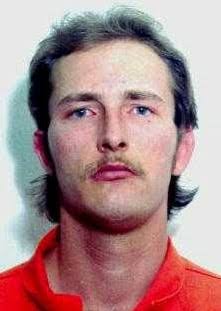 Robert James Anderson
Lewis was not the only person who saw Anderson with the icebox.
Cynthia Perry, who lived at 106 S Mississippi testified that she saw a man she could identify as Robert Anderson carrying an icebox while walking towards a trash bin.1
She described how Anderson stared at her while walking to the bin, turned sideways, and continued walking northward down the alley.
Amarillo police officer Jimmy Rifenberg testified that he was on patrol that day and responded to the scene on Tennessee Street. On arrival, he said that he saw a little blonde girl in a white ice box, dead.1
Amarillo police officer Eugene Wheeler was also on patrol in the area and responded to the scene.1
He testified that he saw a little girl crammed into a white icebox into the fetal position.
"She was too big for the cooler," he said at trial. "So, she had to be forced in there."
He went on to describe the gash on her throat, the stab wounds to her chest, and the bruises around her eyes and lips. He also remarked that the young girl was nude.
Trial testimony would also show that as the girl's dead body was discovered, her family had already begun a search for the missing child.
When the girl had not come home that afternoon, testimony revealed that Barbara Reeves became alarmed. Enlisting the help of her sister, the women immediately began to comb the route between their home and the park.
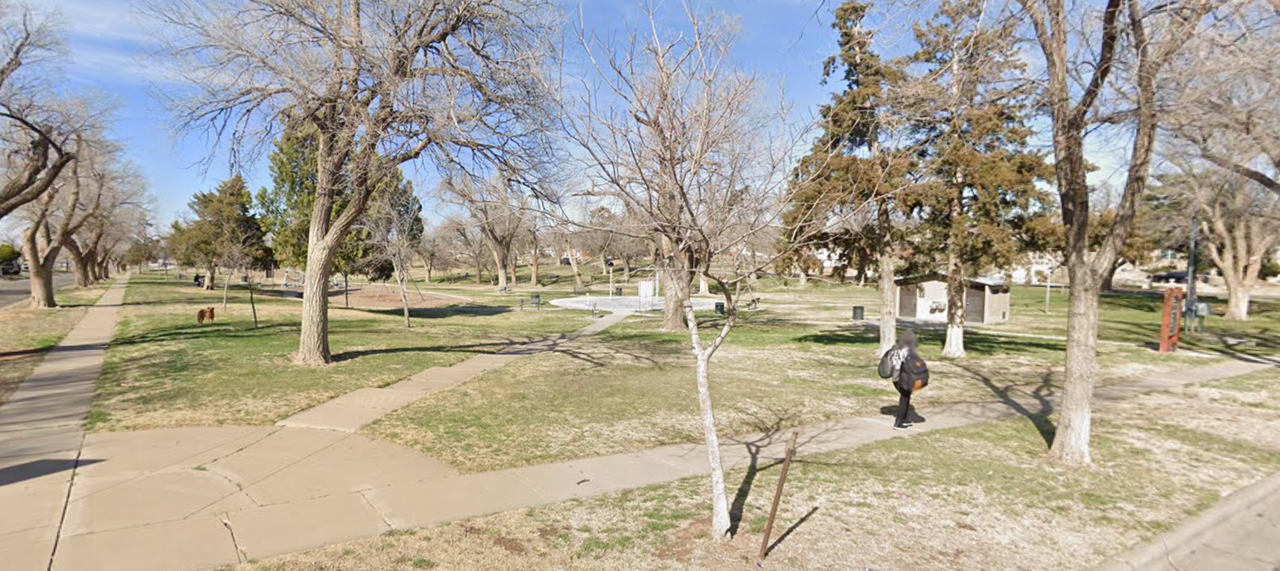 San Jacinto Park
The women were still doggedly searching the park when officers approached them with the news that Audra had been killed.1
The confessions
"I spent my 30th birthday on the jury in the Robert James Anderson trial for the murder of Audra Reeves," said one of the six women who sat in Potter County's 108th District Court in the Fall of 1993.
"The confession itself was very traumatic," she explained. "Not to mention I had a 5-year-old daughter at home. All of it was horrible."
A total of 396 residents of Potter County were summoned to be potential jurors for the capital murder trial. From those potential jurors, Potter County District Attorney Danny Hill and defense counsel Warren Clark selected six men and six women to decide Anderson's fate.
The trial opened with the written confession given by Anderson to police shortly after his arrest.
After a short summary of the argument with his wife, walking outside and snatching Audra up as she walked home, Anderson wrote that he tried to "have his way with her."
"I tried to have intercourse with her. She was fighting and screaming and I could not get her to be quiet," he wrote.
After choking her, stabbing her, and hitting her, he became frustrated at the girl's refusal to die.
"I got a black-handled paring knife with a single edge from the kitchen. I stabbed the girl one time on the left side of her chest and once above her belly button. I bent the knife."
He went on to write down that "I put a gag in her mouth. I hit her once with a quick thrust to her nose.....I then cut her neck. I had hit her on the head with a pipe and a wooden stool made of sturdy 2-by-6's"
"I got a long barbecue fork and stabbed her in the back twice and i bent the fork. I was going to use some shoestrings on her but they broke."
 Audra Ann Reeves
In his written confession, Anderson described how he took Audra into the bathroom and told her she could clean herself off, gently encouraging her to get into the tub. Once she was in the bathtub, Anderson began to gently wash away the blood.
He described turning up the volume on his stereo to drown out her screams. He lit a cigarette and stepped out of the bathroom to drink a small glass of milk. Then Anderson returned to the bathroom and pushed Audra's head under the water, holding her there until she stopped moving.
He checked for a pulse and noted that her tongue was hanging out and assumed the girl had finally succumbed. He then lifted her out of the tub and wedged her into the white icebox.
He turned to do something else in the room and turned back around in time to see the girl haggardly crawling away from the icebox and starting to stand up.
"I put her back in the tub of water and held her down until she was dead." concluded his written confession.
The taped confession was a reiteration of his written confession and was played for the court.
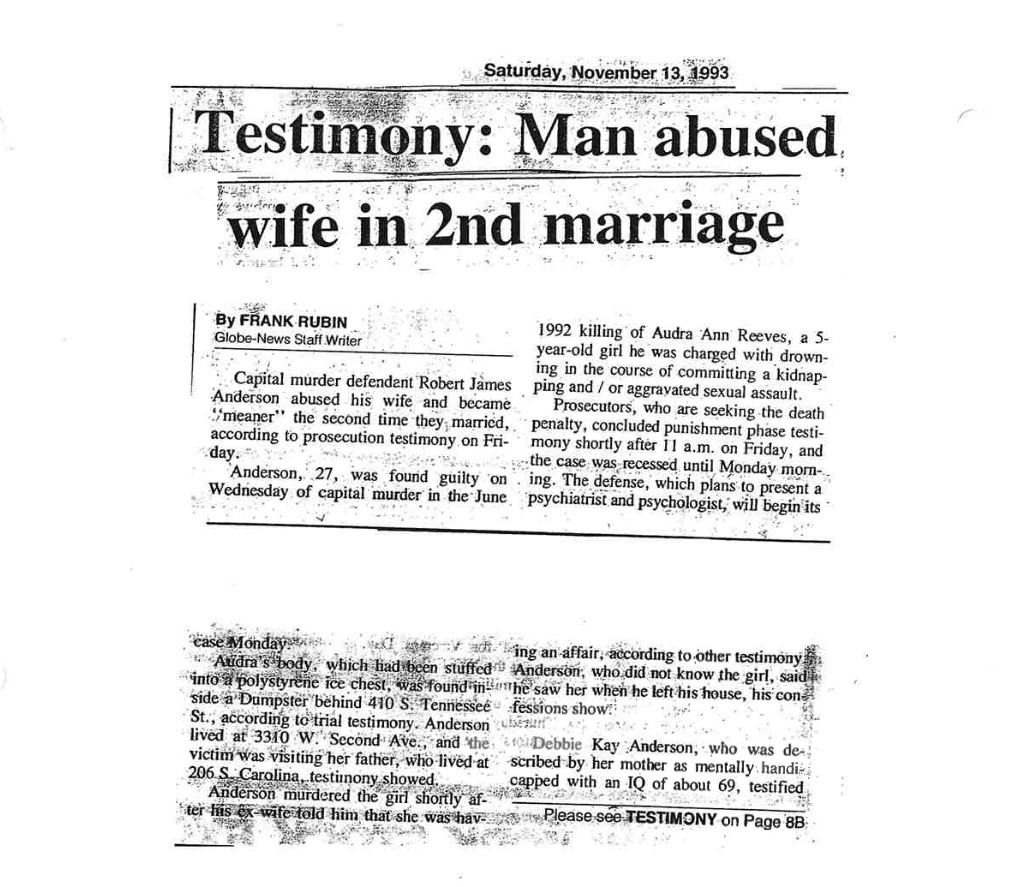 November 13, 1993 trial coverage
Jurors listened to Anderson's voice explain that he couldn't let the girl leave, as she would surely tell someone what had happened in his house at his hands.
Anderson's recorded confession stated how he kept telling her "why don't you die?"
He told police that after he ensured the girl had truly died, he situated her body in the icebox, then sat down at a table. At the table, he described drinking a small glass of water and writing a letter to his estranged wife.4
The Letter to the Reeves
Three weeks after the murder of Audra Reeves, Anderson penned a letter to her family.5
The letter, included as testimony at trial, contained an apology from Anderson to the family.
Anderson wrote that Audra "wasn't the real target" and "just happen to be where my anger lashed out
Citing a newfound relationship with God, Anderson wrote "Mrs. Reeves, you are in my prayers daily. I hope you will pray for me also."
An impossible defense
Anderson's defense counsel challenged the admission of evidence on several grounds. Clark argued that the Anderson's arrest was illegal and cited eyewitness unreliability.6
But as the trial of Anderson's guilt or innocence continued, the weight of the offense grew heavier.
In the legal world, the defense attorney's sole job is to valiantly defend their client. No matter how derelict the crime, the defense must be done and done well. If it is not, it is a termed a failure that reflects on them and the legal system as a whole.
But what happens when there is nothing that a defense attorney can use to do his work well? Audra Ann Reeves was a true innocent--a term sometimes used in the legal world to describe a victim who truly did nothing to warrant their tragic fate.
There was also scanty mitigating factors for the lawyer to work with.
Anderson did not know the girl when he took her. She was simply visiting her father for summer vacation and was walking a short city block home when Robert Anderson saw her.
"He discarded her just as you would trash," District Attorney Danny Hill told the jury in closing arguments. "It's bad enough that he raped and stabbed her."7
"All that's left of Audra Ann Reeves is this ice chest," said Hill as he pointed to the chest that sat on the courtroom table. He then aggressively slapped the lid off the icebox, sending it clattering to the floor.
The six-man, six-woman jury took just 39-minutes to convict Anderson of capital murder.
Punishment
The same jury then entered the second phase of trial where they would decide if Anderson would live or die.
During closing arguments for the punishment phase, Hill began to paint a tale about a scorpion who cajoled and coaxed a frog into carrying it across a river on the frog's back. Before the two animals could reach the other side of the river, the scorpion stung the frog.8
The frog, dismayed that the scorpion had stung him after all, asked why he would do such a thing because now the both of them would drown.
"That's just my nature," said Hill in the voice of the scorpion.
And the nature of Robert James Anderson would be laid bare for the court to see during the punishment phase.
Anderson's defense counsel presented evidence that his client's childhood included traumatic events wherein his father routinely sodomized him.
However, testimony from Anderson's siblings cast doubt on the veracity of such an act.
The majority of Anderson's family lived in Oklahoma but came to Amarillo to testify against their blood relative for the prosecution in a long single-file line of witnesses.
M. Anderson, his sister, testified that Anderson sexually molested her starting when she was 7 years old. She described in detail how Anderson had engaged in an escalating pattern of sexual conduct with her. She told the court of how her brother tried to initiate sex with her when she reached the age of 13. He stopped only when she began to scream, she said.
She also testified to being on the receiving end of physical assaults. He would also routinely try to entice her friends into performing sexual acts with him, she said.
C. Burch, a childhood friend of one of Anderson's sisters, testified that when she was about 11-years-old, she slept over at the Anderson home often. One night, she woke up to see Anderson standing by her bed with just a towel on. She also noted that Anderson had lifted her nightgown up as she slept.
As Anderson grew older, his behavior worsened to the point where he was sent away from the other, younger family members for a period of time.
H. Garza, his step-sister, testified that her mother had naively believed that Anderson had resolved his abnormal sexual behaviors and allowed him to return to the family home.
Shortly after Anderson's return, he began having sex with Garza, who was 11-years-old at the time. She testified that he would regularly hit her with a baseball bat--including when she refused to have sex with him.
In her testimony before the court, Garza explicitly stated that she frequently feared for her life in her interactions with Anderson.
Debbie, Anderson's ex-wife who had argued with him on the day of the killing, testified as to his cruel and physically abusive nature. She explained that while their marriage started off well, he became increasingly physically abusive, often choking and slapping her daily.9
She also told the court about a time she babysat a 2-year-old girl at their home. Anderson took the young girl into a bedroom, where she began to hear the child screaming and crying.
She went into the room to check on the child and saw Anderson laying next to the toddler on the bed. The girl had her diaper off, she said.
Anderson's former mother-in-law testified that she had often heard Anderson talk openly about having sex with young girls. He liked to watch young girls in the neighborhood ride their bikes, she said.
Prosecutors delivered the final piece of testimony in the form of a letter that Anderson had written to another male inmate held at Potter County Detention Center in the months leading up to his trial.
"That little girl wasn't a part of my anger at first...But on that day she just happened to be present when I exploded. I took my anger and desires out on her. This was the first time my desire and anger mixed, and you've read the results.
"I'm not crazy but I do have a problem. it's something I can't control, lve tried to for the last six years. If i was to be found innocent, it would happen again, maybe not the killing part, but the desire is still strong."
The Scorpion
"There's the scorpion," District Attorney Danny Hill told the jury during closing arguments. "And everyone else in here is the frog. His stinger is out, and I submit to you it's going to happen to you again."8
Hill's powerful argument came on the heels of Anderson's defense counsel's agonized plea for mercy on his client, referencing testimony of child abuse and brain damage.
"Did he choose to be mentally ill, to live a life the way he has?" Clark beseeched the jury. "Life is a lottery, and it's unfair. Robert Anderson is damaged goods."
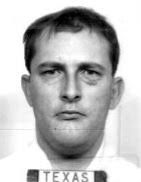 Robert James Anderson
In a somber presentation before the jury, Clark admitted that the testimony was the most unpleasant that he had experienced in his years of defense work. He argued for life imprisonment away from children, pointing towards Anderson's model conduct while in custody.
But in several poignant, at times vulnerable, moments, Clark expressed sympathy for the Reeves family, admitting that there was no way to defend what was done.
The jury deliberated for 1 hour and 27 minutes before returning a verdict of death for Robert James Anderson.
After the trial
District Attorney Danny Hill told reporters that the trial had been taxing on him--particularly as he had two daughters close to Audra's age at home.10
Similarly, Anderson's defense attorney was also the father of a young girl the same age as Audra at the time of trial.
Clark handled Anderson's appellate writs up until execution--but remained consistent in a flat refusal to discuss the case with anyone.
"You want to know more about the case? Okay. There's a court transcript--go get that," Clark told one reporter who called his office some years later.
"It will tell you all you need to know," he deadpanned before abruptly ending the call.
Death Penalty writs
 Robert James Anderson
Anderson's post conviction writs were largely ineffective due to the nature of his crime.
The Texas Court of Criminal appeals affirmed his conviction in 1996. The U.S. Supreme Court declined to review his case in 1997.
The state criminal appeals court again denied Anderson's request for a retrial in 1999.
In 2004, Anderson told a federal judge that he wished to waive his remaining appeals and be executed. The justice obliged and dismissed his remaining appeal in 2005.
Anderson was quoted as telling one journalist that his decision to waive the remaining appeals stemmed from ghostly visions of his young victim appearing to him in his jail cell.
Robert James Anderson was executed on July 20, 2006 at 40 years old.
His last words consisted of an apology to the Reeves family:
"I am sorry for the pain I have cauesd you. I have regretted this for a long time. I am sorry."
 Audra Ann Reeves gravesite, findagrave.com
Audra Ann Reeves is buried in Live Oak Cemetery in Suwannee County, Florida.
Sources
Footnotes
-
Frank Rubin, "Witnesses testify against alleged killer," Amarillo Globe News, published November 9, 1993 ↩ ↩2 ↩3 ↩4 ↩5
-
Frank Rubin, "Prosecutors to request results of examination," Amarillo Globe News, published October 5, 1992 ↩
-
Frank Rubin, "Investigator details confession," Amarillo Globe News, published November 10, 1993 ↩
-
Frank Rubin, "Investigator details confession," pg 2, Amarillo Globe News, published November 10, 1993 ↩
-
Frank Rubin, "Investigator details confession," pg 2, Amarillo Globe News, published November 10, 1993 ↩
-
Frank Rubin, "Defense Attorneys seek to suppress evidence in man's capital-murder trial," Amarillo Globe News, published October 1, 1992 ↩
-
Frank Rubin, "Potter County jury finds Anderson guilty," Amarillo Globe News, published November 11, 1993 ↩
-
Frank Rubin, "Sentence: Jury orders death sentence in child slaying," Amarillo Globe News, pg. 2, published November 16, 1993 ↩ ↩2
-
Frank Rubin, "Testimony: Man abused wife in 2nd marriage" Amarillo Globe News, published November 12, 1993 ↩
-
Frank Rubin, "Jurors sentence Anderson to death," Amarillo Globe News, published November 16, 1993 ↩