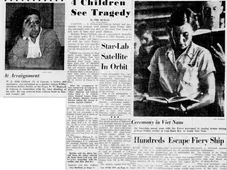
Shortly after 4:00 p.m. on November 11, 1985, Amarillo Police Sergeant James Mitchell, 42, was driving home from work when he witnessed an accident.1
Randall Hafdahl was driving across Texas with two friends, Shawn David Terry and Daniel Helgren, and was driving recklessly and lost control of his car on the Canyon expressway.
Mitchell saw Hafdahl's car swerve around his truck and watched as it veered off the road. Hafdahl's car left the highway, crossed a frontage road, crashed through a wooden fence, and came to rest in the back yard of a private residence off South Austin Street.
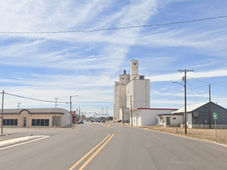
 estimated location of wreck
Hafdahl later told investigators that he had consumed alcohol and hallucinogenic mushrooms earlier in the day.
Officer Mitchell stopped to investigate and to assist in the wreck. Mitchell was off duty and still dressed in his police uniform, wearing an unzipped windbreaker with "Amarillo City Police" emblazoned on the back.2
Seeing the off-duty officer come come into the yard through the downed fence, Hafdahl tried to restart the car, without success. He then hid a loaded 9 mm pistol under a jacket he was carrying, ran from the car and tried to flee through a gate. He could not unlatch the gate.
Mitchell drew his gun and pursued Hafdahl through the yard. An eyewitness said Mitchell identified himself as a police officer and ordered Hafdahl to stop.
When Mitchell was approximately six feet away from Hafdahl, Hafdahl turned and fired four shots. All shots hit Mitchell. Two of the four wounds were fatal, perforating Mitchell's heart and lung. Mitchell, although having his service weapon drawn, never returned fire.
A witness told police that after the officer was shot, one of the men ran to the trunk of the wrecked car and grabbed what appeared to be a bag of marijuana from the trunk.
Arrest
After shooting Mitchell, the three men were taken into custody.
There are conflicting reports as to how Hafdahl was taken into custody. In the original execution report given by TDCJ3, it says:
"Hafdahl fled the scene, only to turn himself in later that night"
However, the media advisory issued by Attorney General John Cornyn in January 2022 states:
"On the night Hafdahl was arrested in Amarillo, he was arrogant, showed no remorse and claimed to not know why he was being arrested."
Further, Randall County District Attorney James Farren told media in 2002 that he recalled being in the office when he was told of Sgt. Mitchell's killing and launching an 8-hour search for the suspects4.
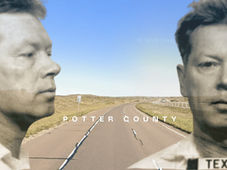
 Randal Wayne Hafdahl
As for Hafdahl's passengers:
- Shawn David Terry, 22, was arrested near the scene of the shooting.
- Daniel Louis Helgran, was later arrested in Clovis, New Mexico.
Terry told police he witnessed Hafdahl shoot the officer.
Helgra testified that he was removing the license plate from the wrecked vehicle when the shots were fired
During a search of the wrecked car, the police recovered a gin bottle and beer cans and several pieces of identification with at least three different names.
Trial testimony
There are two accounts of the trial regarding the circumstances around the shooting.
Hafdahl himself testified that his senses were numbed from the drugs and alcohol in his system. He heard someone yelling at him, could not make out what was said.
When asked whether Mitchell had ever identified himself as an officer, Hafdahl replied, "I can't say if he did or he didn't. All I can say is I didn't hear him."
Further, he testified that he wasn't sure whether the man yelling at him was the same man who was chasing him, or one of his companions.1
One account states that
"Hafdahl testified at trial that he was not trying to flee but, rather, trying to hide the gun. He knew the police would arrive shortly and would discover that he was a convicted felon in Texas who had stopped reporting to his probation officer.
Hafdahl also testified that although he intentionally shot Officer Mitchell, he was acting in self-defense and did not realize Mitchell was a police officer. Hafdahl believed Mitchell was "an angry motorist" whom Hafdahl had run off the road."
Another account states:
Hafdahl testified that he only tried to leave the yard to get to a telephone to call a wrecker. When he heard a voice behind him, he turned and saw a man with a gun. Fearing for his life, he shot him four times in rapid succession.
He said he only realized Mitchell was a policeman as he was falling to the ground. He said that Mitchell was wearing a windbreaker that concealed much of his uniform.
The prosecution offered substantial evidence that Mitchell was visually identifiable as a policeman. This included the fact that Mitchell's police-issue windbreaker was marked, "Amarillo City Police" and bore a badge insignia.
At least nine eyewitnesses to the events immediately before and after Officer Mitchell's murder testified that the backyard was visible from the highway, and they could tell Officer Mitchell was a uniformed police officer.
The two passengers in Hafdahl's car were also able to identify Mitchell as a police officer.
Shawn Terry testified that he saw Hafdahl shoot Mitchell four times in rapid succession. Daniel Helgran testified that he was removing the license plate from the wrecked vehicle when the shots were fired. He also said in a sworn statement that the shots were fired in rapid succession.
Testimony from Helgren stated "[H]e had his blue uniform, and his gun, so I knew he was a police officer, just by looking."
At least four of the witnesses, including one of the passengers in Hafdahl's car, saw Hafdahl turn and look at Officer Mitchell before firing.
A worker who was only 20 to 25 feet from the crime scene, testified that Mitchell identified himself as a police officer as he approached Hafdahl.
Numerous witnesses testified that Mitchell was gesturing and yelling at Hafdahl but that they were too far away to hear what he was saying.
One witness in the yard heard Mitchell identify himself by saying, "Hey halt, halt, stop, police."
An intentional killing
Hafdahl argued that when he shot at Mitchell, it was in self-defense as he did not know Mitchell was a police officer and feared for his life.
The prosecution, however, depicted the killing as one that Hafdahl committed knowingly. They said that Hafdahl's first shot hit Mitchell in the wrist and disarmed him, then he continued to advance on the uniformed officer and pump rounds into him while he was on the ground.
The evidence established that at least one of the bullets that hit Mitchell was shot at a maximum of six feet and could have been closer. This evidence came in testimony from several FBI ballistics experts.
FBI Ballistics expert testimony
Although the estimates varied somewhat, two ballistics experts from the Federal Bureau of Investigation testified that Hafdahl was no more than six feet from Mitchell when he fired the shots.
One of Hafdahl's companions, Shawn Terry, testified that Hafdahl was approximately three to five feet from Mitchell.
To further establish that Hafdahl was close enough to know that Mitchell was an officer, the State called, among others, Ralph Erdmann, a forensic pathologist.
Dr. Ralph Erdmann's testimony
Erdmann did a crime scene reconstruction of Mitchell's killing.
The crux of Erdmann's testimony was that
- Hafdahl shot Mitchell four times with a semiautomatic 9mm pistol;
- the first two shots were non-fatal wounds to the abdomen and arm;
- Hafdahl moved closer to Mitchell while firing, although it was not clear how quickly the shots were fired;
- both the third and fourth shots to the chest were mandatorily fatal; and
- judging from the gunpowder stippling specks on Mitchell's face, Hafdahl was approximately two and a half feet from Mitchell when the final shot was fired.
Erdmann testified that based on the distance and angle from which each shot was fired, only one shot could have been fired when Mitchell was standing. That shot was the one that struck Mitchell's wrist.
Erdmann explained to the jury that many of the assumptions underlying his conclusions were drawn from the reports and conclusions of the investigating officers.
His testimony often indicated that the autopsy results were "consistent" with the officers' theories.
The other three, including the two fatal ones through the heart, were fired when Mitchell was already down.
Sentencing phase
The jury convicted Hafdahl of capital murder on April 4, 1986. During the sentencing phase, the State requested the death penalty and introduced additional evidence as to the three required "special issues":
- Whether Hafdahl deliberately killed Mitchell;
- whether Hafdahl's response to Mitchell's provocation, if any, was unreasonable; and
- whether Hafdahl would probably commit criminal acts of violence in the future.
Hafdahl had a previous conviction for delivery of LSD. He received a sentence of ten years' probation. Testimony at the punishment phase of his trial indicated that Hafdahl had previously overseen a methamphetamine production operation in Colorado. He had also been charged with aggravated kidnapping and had a warrant out for his arrest at the time of Mitchell's killing.
He had dyed his hair and began using the aliases Robert Moore and Jack Douglas Cone.
Prosecutors said that Hafdahl knew that if he was caught by Mitchell, he would be arrested and tried for kidnapping.
Erdmann was not called to testify further, but the police officers testified in more detail about the kidnaping arrest.
During the punishment phase of trial, the State presented evidence that Hafdahl had been arrested on Aug. 11, 1980, in Richardson, Texas, and charged with unlawful carrying of a weapon and felony theft. The police had been conducting surveillance of Hafdahl's house on suspicion that the occupants were involved in a burglary ring.
Hafdahl and another man left the house and got into a van, which the police subsequently stopped for a traffic violation. During the stop, Hafdahl was caught trying to shove a .38-caliber gun under the seat. When the police conducted a search of the house, they discovered stolen property and narcotics.
Five law enforcement officers from both Texas and Colorado testified that they knew Hafdahl to have a bad reputation for being peaceful and law abiding, and reputation for being dangerous and violent.
Kidnapping offense
The State presented the testimony of two police officers, one from Rockwall and the other from Grand Prairie, Texas, who testified that they had arrested Hafdahl on a warrant for aggravated kidnapping, but had released him pending investigation by the FBI.
The officer stated that the alleged kidnapping victim was forcibly taken from Grand Prairie, Texas, by Hafdahl and two others, and transported first to Colorado, then Wyoming, and eventually returned to Texas, where she escaped.
During that time, the victim claimed she was beaten, gagged and her life threatened. Hafdahl was not named as one of the two men who originally kidnapped her from the parking lot, but the victim's statement listed him as one of nine people who participated in the course of the abduction.
Hafdahl was never officially charged by the FBI on the presumed federal charges; however, the implication from the evidence was that Hafdahl believed he was wanted on these outstanding charges and killed the officer to avoid arrest.
Future dangerousness
The State presented considerable evidence, in addition to the kidnaping testimony, during the sentencing phase in order to show Hafdahl's propensity for violence and the likelihood of future dangerousness.
- Several officers testified as to Hafdahl's bad reputation for violence.
- An officer testified that he had arrested Hafdahl in 1980 for carrying a concealed weapon, but the charge was dismissed when Hafdahl could not be found.
- An officer testified that he had arrested Hafdahl for felony theft charges involving stolen weapons.
- An officer testified that Hafdahl was the "enforcer" of a large Colorado-based drug trafficking ring and was also involved in trafficking stolen guns.
- Shawn Terry, one of Hafdahl's companions, testified that Hafdahl was the "overseer" of the drug trafficking operation and occasionally sold the drugs himself. According to Terry, Hafdahl's primary responsibility was collecting debts owed for drugs, and, for this reason, Hafdahl carried a 9mm pistol in his possession "almost all the time; if it wasn't on him, it was somewhere near."
- Although it was not alleged that Hafdahl personally forced Simpson into the van, Hafdahl was alleged to have helped detain her for two weeks
Also, one of Hafdahl's companions testified that in the days before the murder, Hafdahl admitted that he had "jumped bond" in Dallas, and had begun using an alias and had dyed his hair.
Bates Farm methamphetamine manufacturing
While in Colorado, Hafdahl worked at a place called the "Bates Farm." The Bates Farm manufactured methamphetamines and traded stolen guns and illegal weapons. Hafdahl was known as the "right-hand-man" and the "enforcer" for the Bates Farm. He oversaw the entire drug operation, including selling drugs and collecting debts or money for the sale of drugs. Hafdahl was known to carry a weapon on a daily basis.
Hafdahl presented several witnesses and family members who testified that they had never seen him do anything violent, even when provoked. However, on cross-examination, one relative admitted she had not seen him in the six or seven years prior to his arrest.
Hafdahl sentenced to death
April 8, 1986, a jury decided that Randall Wayne Hafdahl aka Jack D. Cone should be placed on death row for shooting to death off-duty Amarillo police Sgt. James Mitchell Jr.
Appeals
Hafdahl's post-conviction writs spanned the course of 16 years.
In the years following Hafdahl's death sentence, the medical examiner who reconstructed the crime scene, Dr. Ralph Erdmann, pleaded guilty to perjury and tampering with government records in other cases he testified in. As a result, Hafdahl's appellate writs centered upon Dr. Erdmann's testimony at trial.
Following a last round of denied petitions for relief in 1999 and 2000, Hafdahl was bound over for execution.
Execution date set
After all his appeals were exhausted, Hafdahl was brought to Randall County's 47th District Court where he appeared before visiting judge David Gleason.
Gleason set Jan. 31, 2002 as the execution date, to which Hafdahl told the judge, "Sounds good to me."
"That reveals his demeanor and attitude from the beginning," Randall County Criminal District Attorney James Farren said to media outlets. "He's showed complete disdain."
Farren recalled that he was in the office when he was notified that Mitchell had been killed. At that moment a 8-hour search was launched with the help of surrounding police departments to find and take the uspects into custody.4
"The first shot struck Sgt. Mitchell's wrist and disarmed him, he was helpless," Farren said. "Hafdahl continued to approach and executed him. He continued to pump rounds into Sgt. Mitchell. If he is willing to kill a police officer, he certainly is not afraid of you or me."
The widow of Hafdahl's victim attended the hearing for Hafdahl's execution date along with her two daughters. While the family did not speak to the media at the hearing, she later shared her thoughts on the impending execution of her husband's killer.
"After 16 years it's about time. We have been through it every step of the way, and I'm looking forward to reaching a conclusion. It has taken a toll on my family," said Ellen Mitchell Stone. "My girls were 8 and 9 when their father was killed. Now, they have graduated from college, are married and have jobs."
Many of Sgt Mitchell's former co-workers also attended the hearing. One of whom was Ken Farren, chief deputy in the Potter County Sheriff's Department and worked for about 12 years with Mitchell.5
"He (Hafdahl) said in the courtroom it was fine with him, and today is fine with us," Ken Farren said. "He (Mitchell) was somebody I could lean on. It's time for justice to be served."
Execution
Randal Wayne Hafdahl was executed on January 31, 2001.6
He was the 4th inmate executed in Texas in 2002 and the 260th inmate executed in Texas since 1976.
Final Meal:
A Chef salad with ranch dressing, double meat cheese burger (all the way), French fries, ketchup, and a chocolate shake.
Spoken last words7:
"Yes, I do. My last full statement is being released in a way other than me right here. All I want to say, I love you all. Approximately 28 years ago, I remember looking down at a bassinet, I saw an angel. I am looking at her right now. I love you, Colleen. Let's get going. The road goes on forever, and the party never ends. Let's rock and roll. Let's go Warden. Me and you, all of us. Remember wet Willie - keep on smiling, keep on smiling. I love you. It's on the way, I can feel it. It's OK, baby. We have a party to go to. I can feel it now."
Written statement:
"Over the last few days we've had a chance to say it all. If I lived to be a 100, the love we all share couldn't be more beautiful. Than you for loving me. II Timothy 1.7 tells us that God DID NOT instill in us the spirit of fear: but of power, love, and of sound mind...For those of you who seek to find fear in my eyes? Look into yourself, thats where you'll find the fear you so desperately search for. I leave this life with a clear conscience and heart; I can say that only because I have spoke the truth over the last 16+ years. I am the only one that can say that truthfully.
Chief Neal: as to what you said to me when you had me in the back seat of your car on the night of Nov 11? Thank you for being so determined to only seek a specific conclusion, truth be damned! I say that because the thought of having to die of old age in prison is the worst death any person could endure.
To Modina Holmes: I thank you for planting that bullet in the ground, and the cigarette butt, also the knives Danny Helgren had packed in his suit case in the trunk of the car; which you placed in the cab for your photo shoot. I also want to thank you and Chief Neal, because of your actions, it shows me that you are human and can love, the same as I love my Club Brothers. We're a lot more alike than you think.
To Wes Clayton: You were nothing but a paid chump. You were brought in to do all the dirty work on this case so as to shield Randy Sherrod, "AKA Daffy Duck" from possibly soiling his reputation if the bottom fell out of this conviction through the appeals. For 16 years now you have been the one I have dreamed of having the chance to meet again: UNrestrained! I really would have loved to have had the chance to take your lying ass to school, boy!
James Farren: You ain't as slick as you think you are. I read that article the Globe printed on the 27th, where you expressed how Eardmann wasn't important because there was at least one witness at trial who testified the first shot diarmed Mitchell and rendered him defenseless. Your sure right about that. Just wonder how many people out there other than me and you know that one witness you used to justify Eardmann was actually Eardmann himself! You know as well as I do the only witness to testify about sequence of shots was Eardmann himself. I have to admit, when it comes to walking the line between a lie and a deception, your good! You sure your not related to Clayton?
And to the Mitchell family: I truely am sorry for the tragedy that took place on Nov 11, 85. Thats all I can give you. Thats all I will give you. Because today your making my family and loved ones a victim just as you have cried to the world you were in this tragedy. I did not deliberately shoot James Mitchell. I had no premeditation in my thoughts when I spun around and fired, no matter how many fantasy motives Clayton and Sherrod fabricated. So today my family becomes a victim. You know, the truth sets you free, and the truth is, if your loved one had acted with any professionalism at all, he would be alive today! And thats all I got to say about it.
Scooter, get the beer and get in the truck, take me home baby, we got a party to get ready for. I love ya'll. Remember Wet Willy Boocub."
Following the execution, the husband of Mitchell's daughter, Dean Clapper, read from a prepared statement.
"Tonight's execution can not begin to erase the years of heartache, grief and emotional loss that Hafdahl's actions have caused our family," Clapper said. "Never to be regained is the innocence of two children, the loss of childhood memories or recover the loss of a loving husband and father. "In conclusion, our family has stood together facing the most evil of individuals. Tonight, we have finally obtained peace."
 Sgt. James Mitchell
At the time of his death, Officer Mitchell was 43 years old. He had been a police officer for 20 years, 16 of which were spent with the Amarillo Police Department. He was survived by his wife; three children aged, 20, nine, and eight; and a six-month-old grandson.
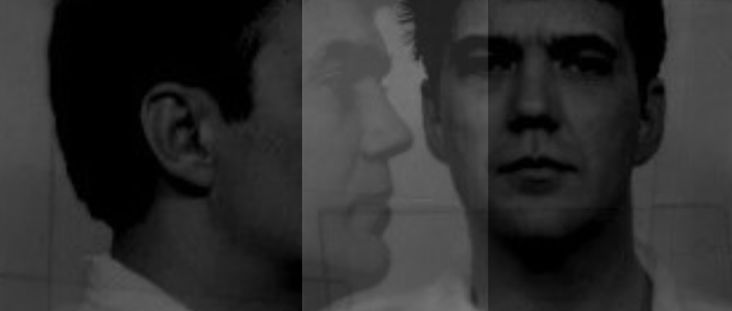
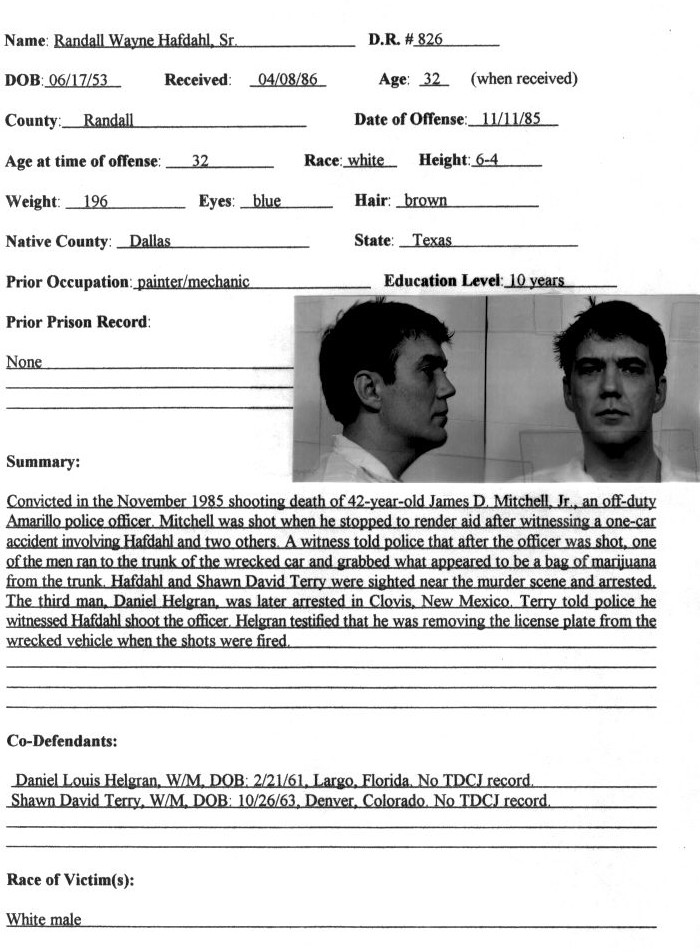 Randall Wayne Hafdahl TDCJ intake
Footnotes
-
Justice Grady Golly, Randal Wayne Hafdahl vs Gary Johnson, Director, TDCJ No. 00-10268, U.S. Court of Appeals Fifth Circuit, published May 15, 2001 ↩ ↩2
-
Hafdahl v. State, 805 S.W.2d 396 (Tex. Ct. Crim. App. 1990)(en banc), cert. denied, ↩
-
"Execution Report: Randall Hafdahl," accessed October 11, 2026 ↩
-
Karla Abernathy Thetford, "Randall Wayne Hafdahl execution date scheduled," Canyon News, published December 14, 2001 ↩ ↩2
-
Kevin Welch, "Execution date set for Hafdahl," Amarillo Globe News, published December 15, 2001 ↩
-
"Texas executes man who killed cop," UPI, published January 31, 2002 ↩
-
Last Statement of Randal Hafdahl, Texas Department of Criminal Justice, published January 31, 2002 ↩