
"He should be protected from himself and society should be protected from him," testified the psychiatrist who spent only 45 minutes interviewing Favis Clay Martin before reaching his conclusion.
"I think in all probability he was psychotic when he committed this act." he added.
On February 21, 1970, Favis dropped off his young son at the babysitter's house and returned to his home on the 2200-block of SE 19th Avenue to wait for his ex-wife to arrive.
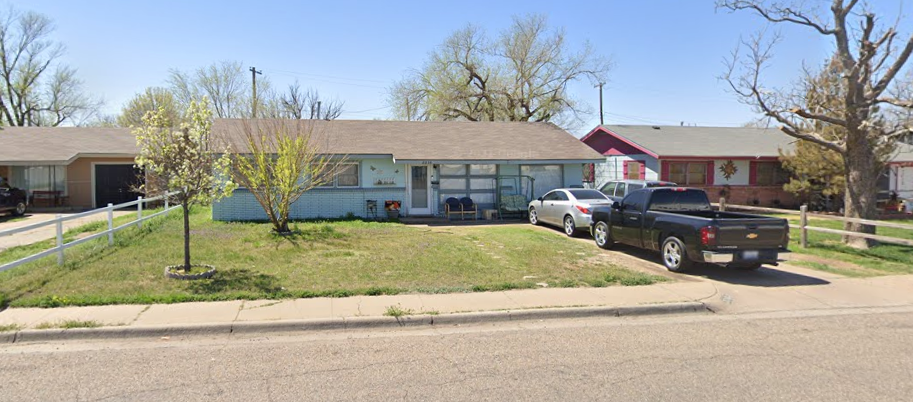 2216 SE 19th, Amarillo Texas (source: Google Maps)
When Favis and June Etta Martin divorced the year prior, June was given custody of their young son, Michael, and her daughter from a previous marriage. She then took the children and moved to Tempe, Arizona.1
Favis remarried and remained in Amarillo. But he began to believe June wasn't caring for their son properly. So, he drove through the night and the desert to their home in Arizona. There, he plucked the boy out of the home and returned to Amarillo.
Upon learning that June had filed kidnapping charges against him, he offered to return their child to her if she would come to Texas to get him. She agreed.
On that day, June arrived at the home on SE 19th Avenue with her 15-year-old daughter, Barbara, and a friend. Favis and his new wife, Marvell, let them inside, informing the trio that the boy was "at the babysitter's" and offered a fresh pot of coffee.
As they sat at the kitchen table, June sent her daughter to retrieve her purse from the car.
At trial, Barbara described how she re-entered the house the purse in hand just as Favis pulled a pistol.
"I'll only be confined in a mental hospital for killing you," Favis said to June as he shot her at close range.
June, injured by the first bullet, flipped the kitchen table and she rushed out the same door that Barbara had just entered through. She collapsed on the driveway.2
Favis followed his ex-wife out close on her heels, "pulling the trigger...until the gun clicked."
Barbara and her friend, 24-year-old Delbert McQueen, ran towards June. Favis turned the gun on them and ordered them to stay away from the dying woman.
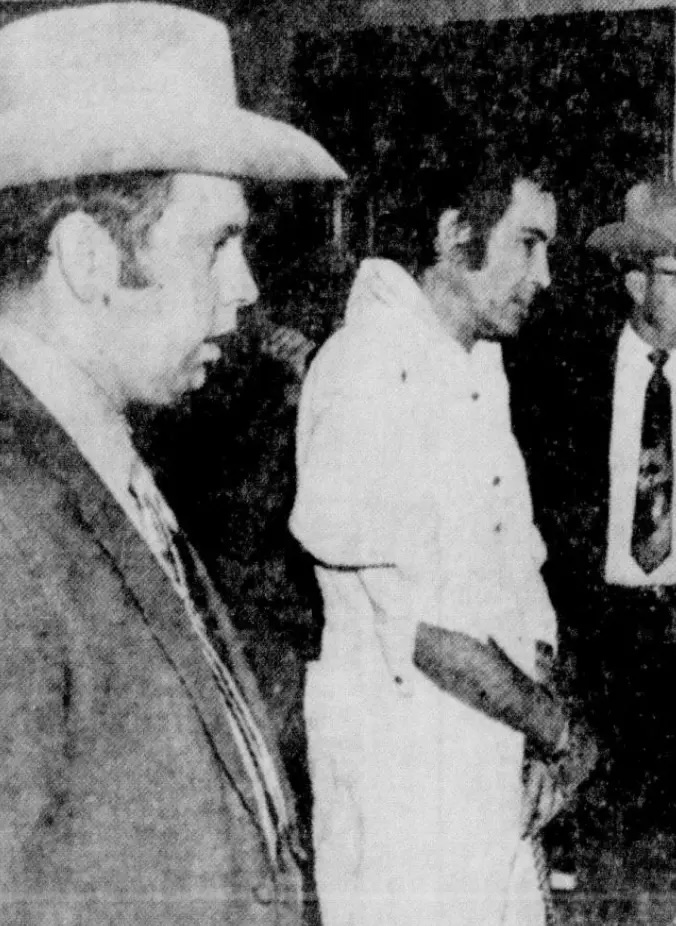 Favis Clay Martin (source: Amarillo Globe Times)
Amarillo police officer Fred Boyce arrived to the Martin house, in answer to a disturbance call at that address.
Recognizing Favis, Officer Boyce waved and greeted him, "Hi, Mr. Martin."
Favis approached the officer, extending his wrists for the officer to handcuff, "I guess I'm the one you want; I did it. The gun's in the house on the T.V."
Officer Boyce then saw the body of June Etta Martin lying in the driveway.
Favis was booked into Potter County Jail on a charge of murder. He requested a competency hearing, where a psychiatrist assessed him as "grossly schizophrenic" and a danger to all--but competent enough to stand trial.
The trial itself was marked with several oddities. An intruder broke into the hotel room where a witness for the State was staying--Barbara, the 15-year-old daughter of June.
Barbara chose not to press charges against the intruder, who was identified by a billfold he left in the hotel room. Her reasoning was a lack of desire to remain in the city to do so.
"[Barbara] is understandably reluctant to return to Amarillo, and I'm certainly not going to force her to. The first time she was in Amarillo she saw her mother killed before her eyes. On her second visit to the city, there was the break in," said District Attorney Tom Curtis to the Amarillo Globe Times.
Barbara and her friend, Delbert McQueen, testified at trial as to the events of that day. Defense attorney, Selden Hale, argued that Favis was simply not sane. On the contrary, several witnesses testified that Martin had "never exhibited any signs of mental illness or disturbance."3
When the jury retired to deliberate, one juror began acting erratically—claiming to be an assistant marshal, questioning people in the courthouse, and attempting to enter a judge's chambers.
The trial judge stopped deliberations before they began, removed the juror, and substituted an alternate. Ultimately, Favis was found guilty and sentenced to life in prison.4
While in Potter County Jail awaiting his appeal of the murder conviction, Favis was one of six inmates implicated in a thwarted plan to escape.[^5{ The men had obtained a partial hacksaw, which they used to saw through the bars. The inmates had refastened the sawn-through bars with chewing gum until they could make their escape, according to Potter County deputies.5
When officers escorted Favis to court on the scheme to escape, he then lunged at a newspaper employee in an attempted attack. The newsman, Larry Conners, was unharmed.6
But Favis wasn't done yet.
On the day of the murder, Potter County child-welfare officer Mary Beth Blackwell filed a emergency petition concerning Favis and June's 2-year-old son, Michael Henry Clay Martin.
In November 1970, A judge terminated Favis' parental rights and allowed the sister and brother-in-law of June Etta Martin to adopt the child.
Favis spent years fighting to overturn the termination and adoption from his jail cell. His efforts were rejected on state and federal levels. But in his fight for his son, he soon earned two more criminal charges.
Favis mailed threatening letters to the attorney and judges who handled the adoption. The letters referred to the killing of June Martin and warned of violence if the adoption were not undone.
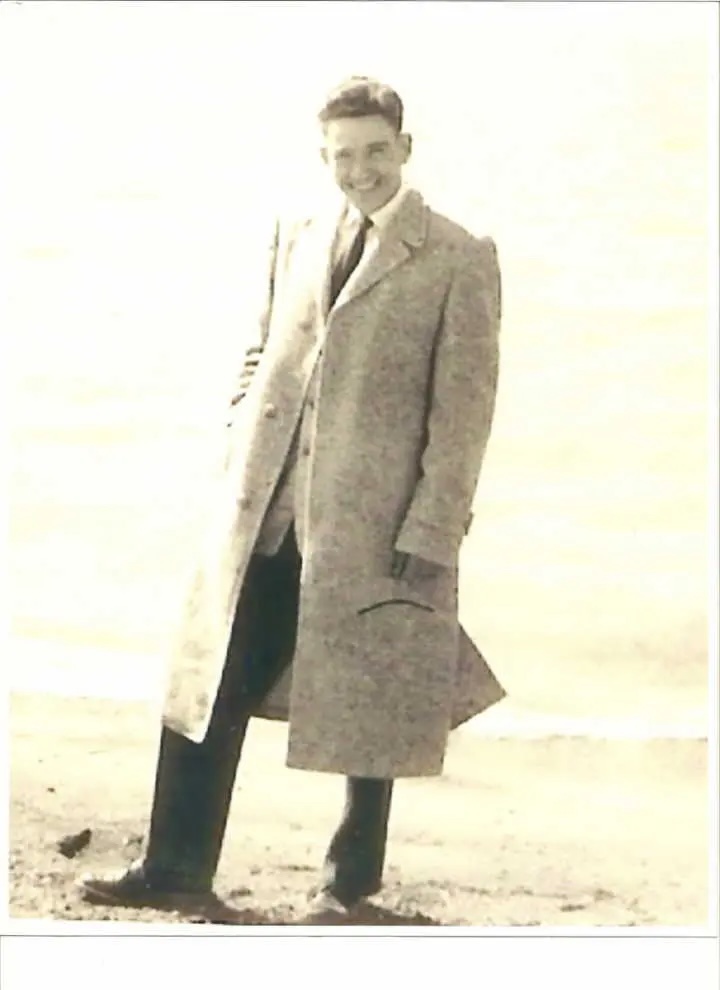 Favis Clay Martin (Source: Findagrave.com
An FBI agent interviewed Favis at the Texas prison in June 1979. Although Martin refused to sign a written waiver-of-rights form, he admitted to writing the letters and showed the agent his typewriter.
Among the statements made in the letters were:
- "When there is no remedy left, then I'll go for broke."
- "We will all burn in hell together."
- "They best think about it. Their sister didn't."
- "I'll see you in hell before I permit you to do this to me and my son."
- "I'm telling you this because I mean every word of it."
His suit was eventually dismissed at the federal level. But he continued his path of zealous litigation that continued until his death in 2015 while in federal custody at Rochester Prison.
His son, Michael, died in 1995. Another, younger son died in 2014.
Sources
Footnotes
-
Phoenix Arizona Republic, "Tempe Mother killed in Texas" published February 22, 1970 ↩
-
- Amarillo Globe Times, "Martin Gets Life Term," published June 10, 1970
-
- Amarillo Daily News, "Martin pg 2 Conviction," published June 10, 1970
-
"Martin ruled Guilty, given life sentence", published June 10, 1970 ↩
-
Amarillo Daily News, "Bars Found Sawed in Potter County Jail Cells," by Steve LaPrade, published December 8, 1970 ↩
-
Amarillo Globe Times, "Prisoner Is Subdued in Lunge at Newsman," published December 9, 1970 ↩